We Are Like Tea

If you’ve ever made stovetop tea, you know the moment.

Calm.
Calm.
Calm.
And then suddenly: BOILOVER!

It happens fast.
All at once everything rises.
Sound familiar?

We are like tea.


The myth of “never boiling over”

There’s an idea that emotional regulation means never losing control.
Never getting overwhelmed.
Never reacting strongly.
Always calm. Always composed.

But that’s not regulation.
That’s suppression.

Real emotional regulation isn’t never boiling.
It’s learning how to simmer — and how to return.

Because we will all boil over sometimes.

We’re human.
We’re under heat.
We’re carrying things.
We’re transforming.

Tea doesn’t become tea without heat.
And we don’t become ourselves without pressure either.


Catching the moment

When you make stovetop tea, there’s a moment right before the boilover.

The surface rises.
The bubbles change.
Everything starts to lift.

If you notice in time, you lower the heat.
The tea settles back into a simmer.
Still hot. Still transforming — just contained.

In life it can work the same way.

Sometimes we notice:
“I’m getting overwhelmed.”
“I’m getting sharp.”
“I’m getting flooded.”

So we pause.
Breathe.
Step outside.
Drink water.
Reset.

We don’t turn off the heat of life.
We just lower it enough to simmer.

That’s regulation.


And sometimes… it still boils over

Even when we’re trying.
Even when we know ourselves.
Even when we’re standing right there.

It happens.

So the real question isn’t:
Did I boil over?

The real question is:
Did I repair?
Did I reset?
Did I come back to myself?

Emotional regulation isn’t perfection.
It’s returning to homeostasis.
Returning to center.
Over and over again.

We’re not meant to live at room temperature all the time.
We’re meant to live warm and engaged — at a steady simmer.

And when we do boil over?
We clean up.
We make amends.
We return to center.
We keep going.

That’s regulation.
Not perfection.
Return.


A small reframe

If you feel close to boiling most days:
You’re not failing.
You’re under heat.

If you’re learning to notice earlier:
That’s growth.

If you’re making amends after boilovers:
That’s maturity.

If you’re returning to center again and again:
That’s regulation.

Not perfection.
Not suppression.
Just simmering…
and coming back.


Closing

We are like tea.

Calm.
Calm.
Calm.
BOILOVER.
Return.
Simmer.
Continue becoming.

All of it is part of the process.


If this resonates, you’re welcome to share what helps you return to center. Pseudonyms welcome. Kindness always. 💛


Cooked where we are. Still counts.
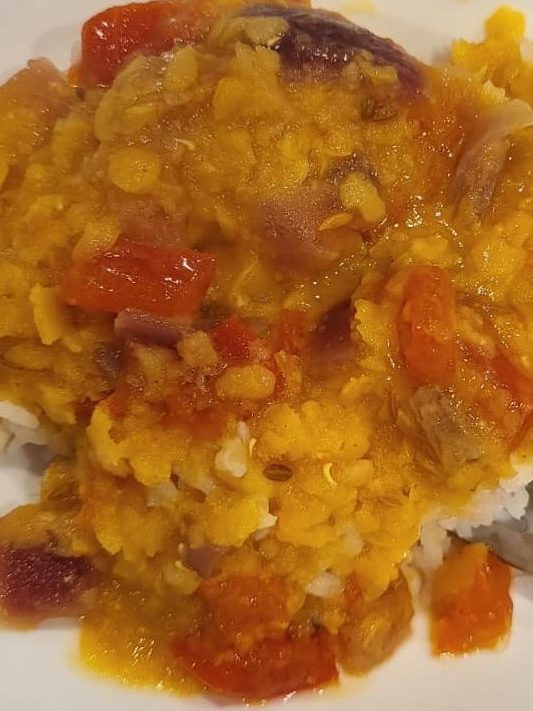
Dal (Instant Pot One-Step) — 💛 I Just Can’t Even

There are days when cooking feels creative.
And there are days when you just need something warm, nourishing, and forgiving.

This is for those days.

This is a put everything in the pot, press a button, and let it tell you when it’s ready kind of meal.

No sautéing.
No layering.
No pressure (except the Instant Pot kind).

Just real food.
Made gently.


💛 What this is

A true one-step dal.

Everything goes in at once.
The Instant Pot does the work.
You get to exist while it cooks.

Soft. Comforting. Flexible.
Very hard to mess up.


🫶 What to expect

This will not look like restaurant dal.
It will look like home, survival, nourishment, and care.

It will smell like someone is taking care of you.
Even if that someone is you.

If it turns out slightly different each time?
That’s normal.
That’s life.
That still counts.

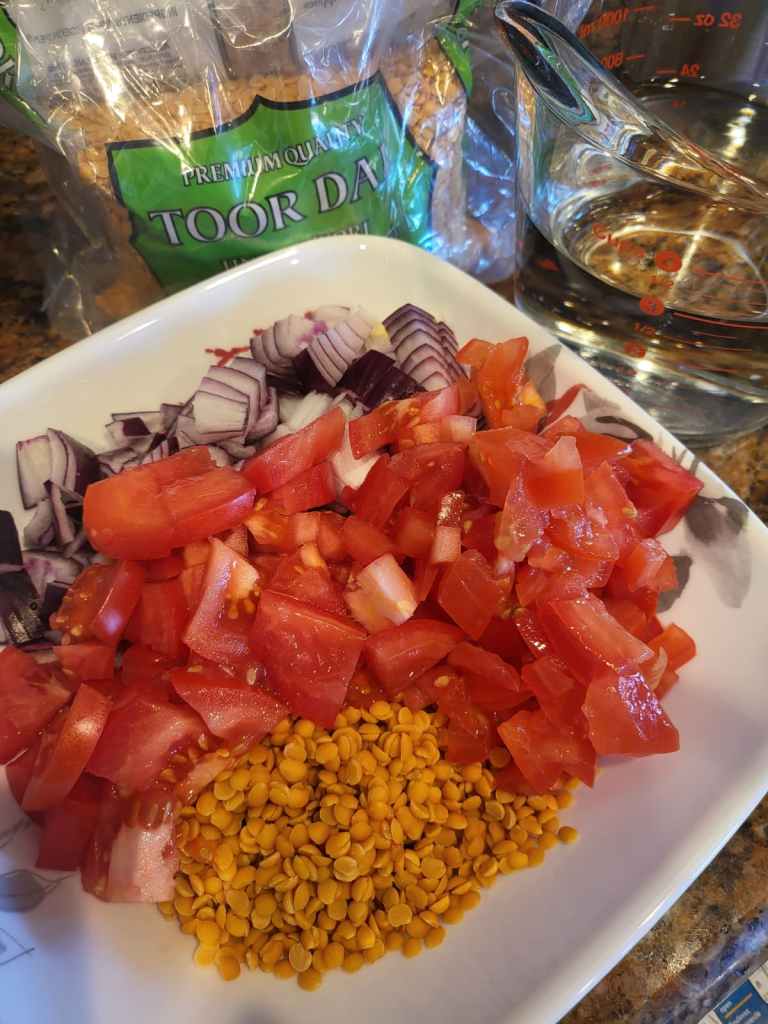
🥣 What you need (serves ~4)

  • 1 cup toor dal (or masoor/moong — all work)
  • 1 medium onion, chopped
  • 1-2 tomatoes, chopped (I used 1½ because that’s what I had and I wanted to use it all up)
  • 3 cups water
  • 3–4 cloves garlic, chopped (or 1 tsp garlic paste or frozen garlic cube) (I forgot to put my garlic in! If you do the same, don’t worry about it, dal is very forgiving. There’s a reason you’re doing low bandwidth cooking right now.)
  • ½ tsp cumin seeds
  • ½ tsp cumin powder
  • ¼ tsp turmeric
  • Small dash chili powder (optional) (I’m a wimp with chilis 😂😅If you are, too, you’re not alone😊)
  • Salt to taste (start with ~1 tsp)

Optional comfort add-ins

  • drizzle ghee or butter at end
  • squeeze lemon
  • chopped cilantro

All optional. Nothing required.


🍲 (Almost) One-Step Method (the whole point)

💛 Want a 60-second version?

Here it is: Dump everything → close lid → sealing → press Pressure Cook 8 min → wait → open → eat.

Step 0: Take a breath 😄

You’re just making dal.

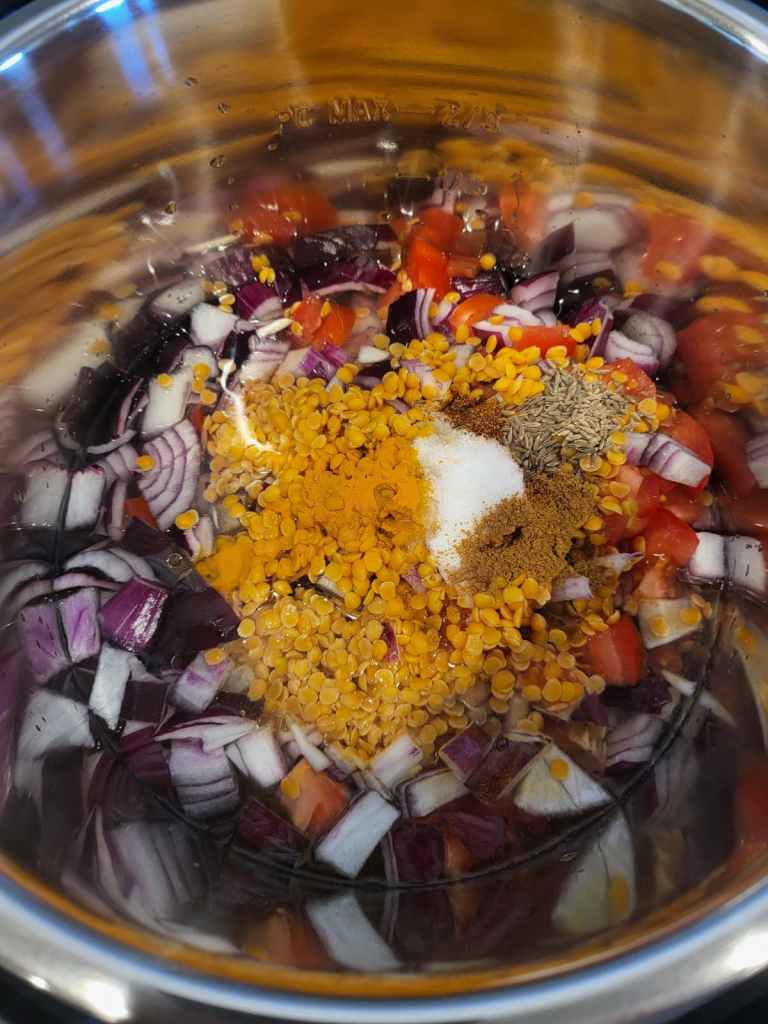
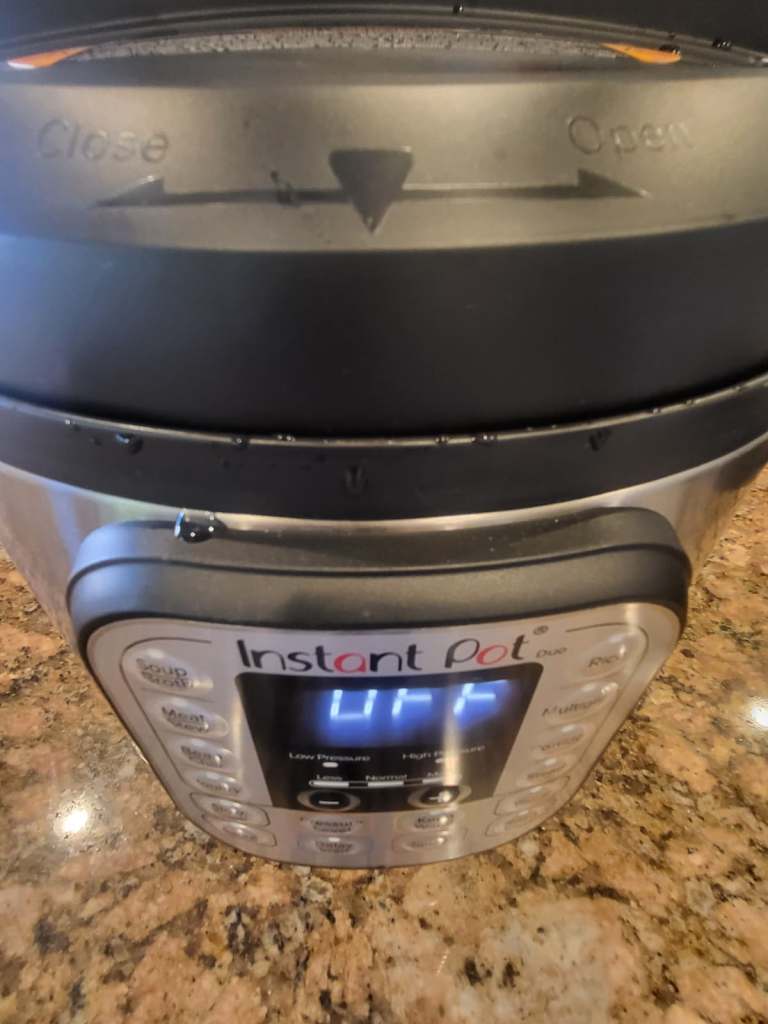
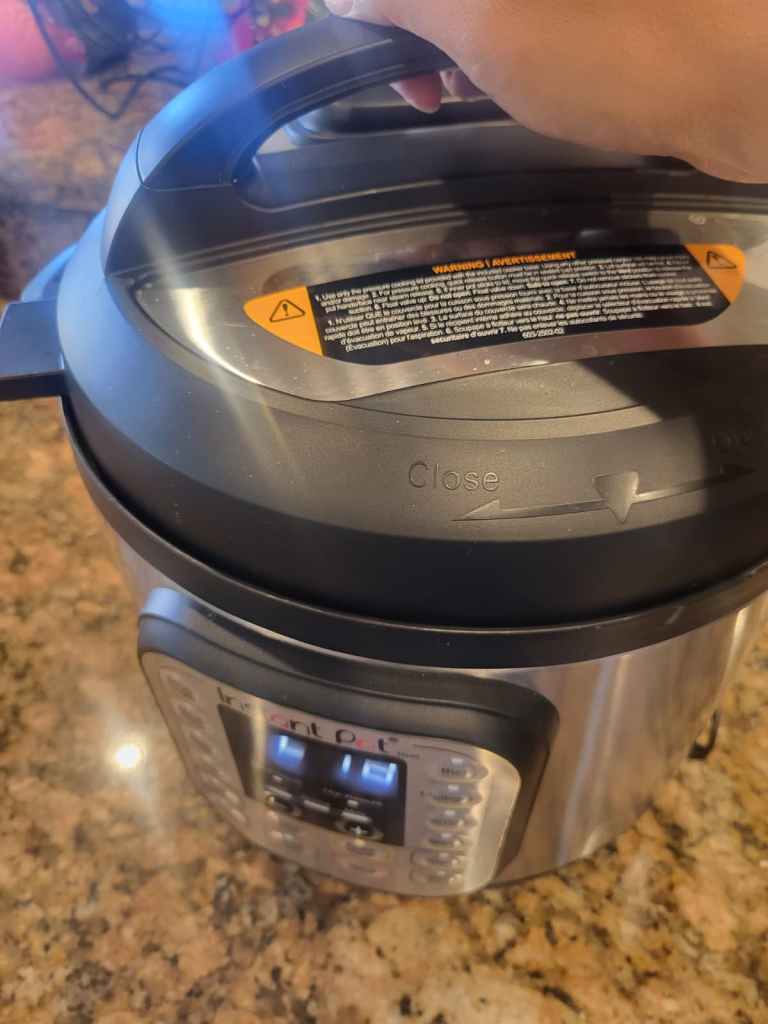
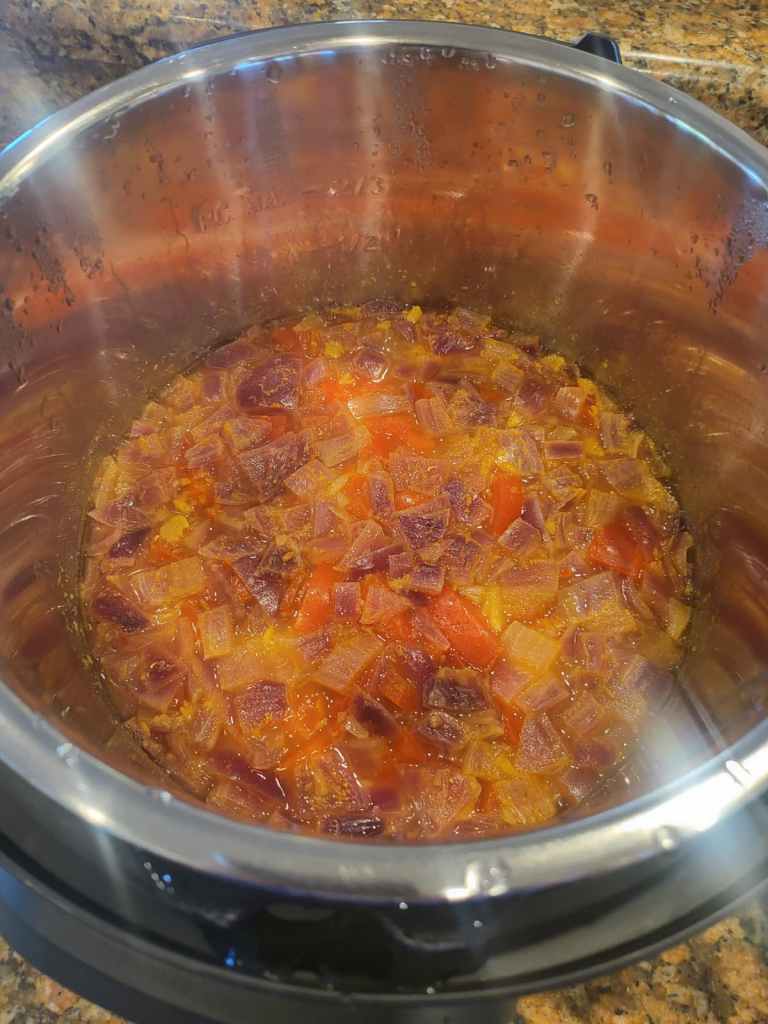
Step 1 — Put everything in the Instant Pot (this one is Instant Pot Duo 7-in-1 Electric Pressure Cooker)

Dump everything into the the stainless steel inner pot in the instant pot. I started with my bowl and then remembered that was pointless 😂

Stir once if you feel like it.
Or don’t.

Both are valid.


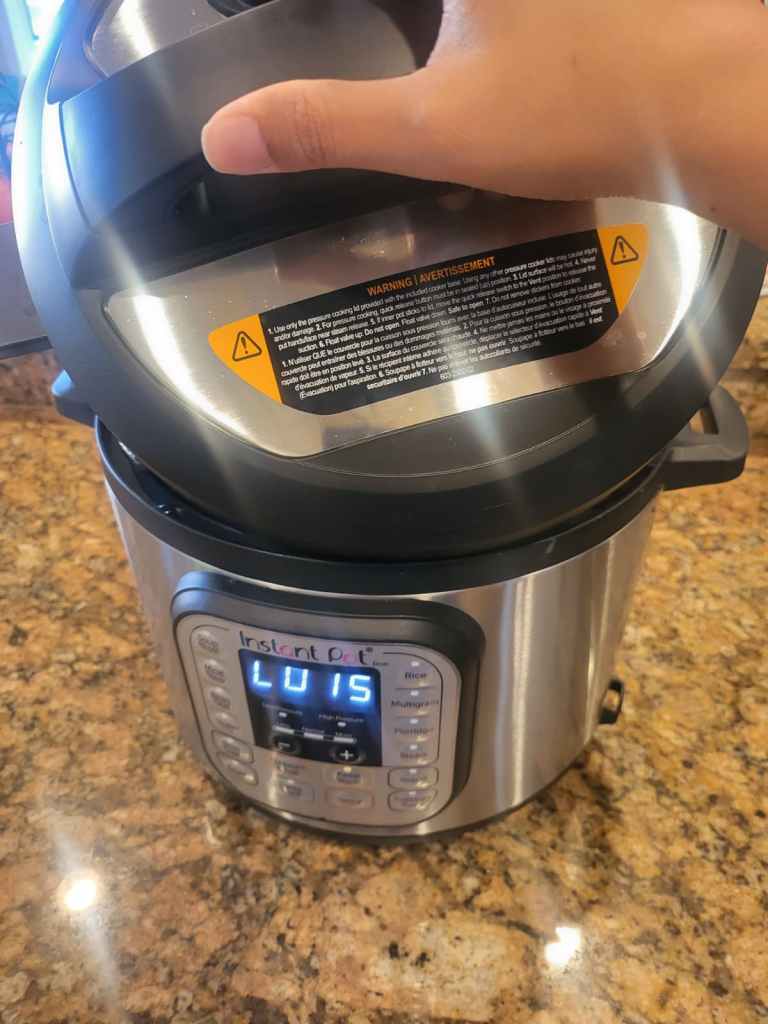
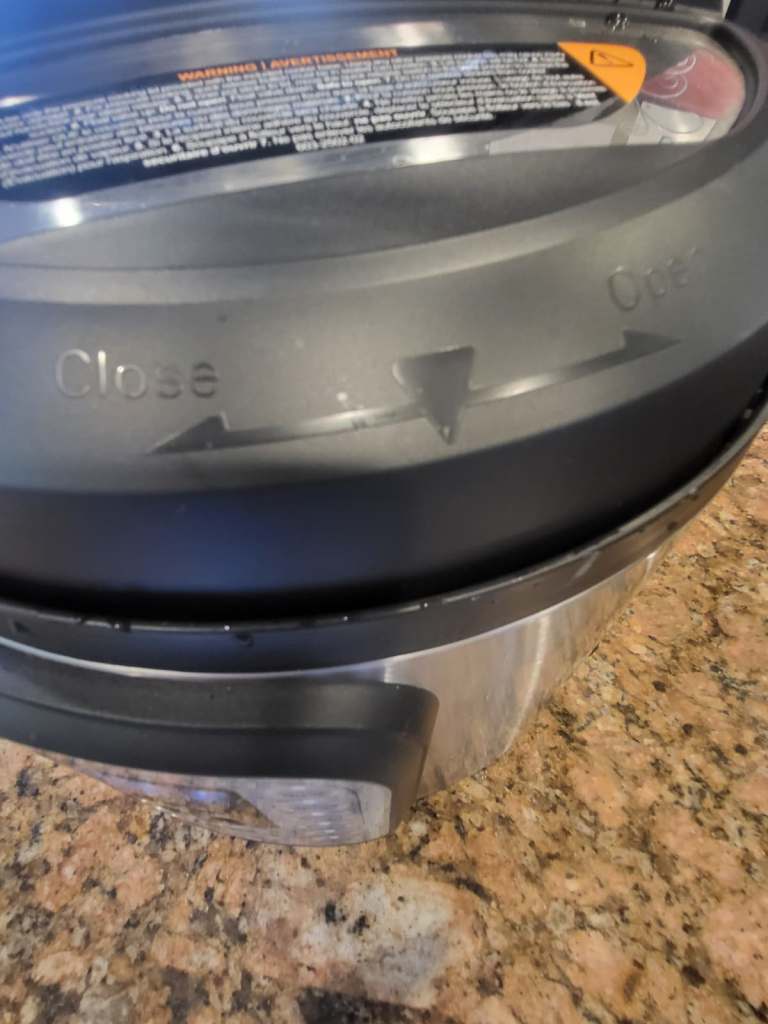
Step 2 — Close the lid

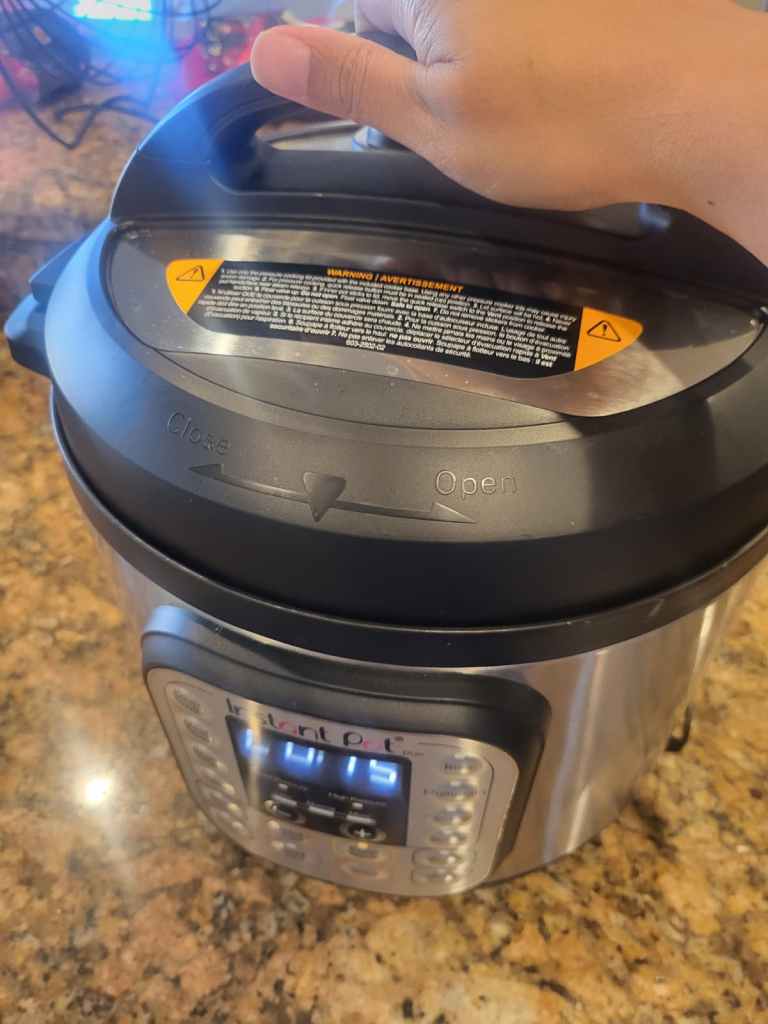
Close lid: Put lid on, twist until it stops (locks).


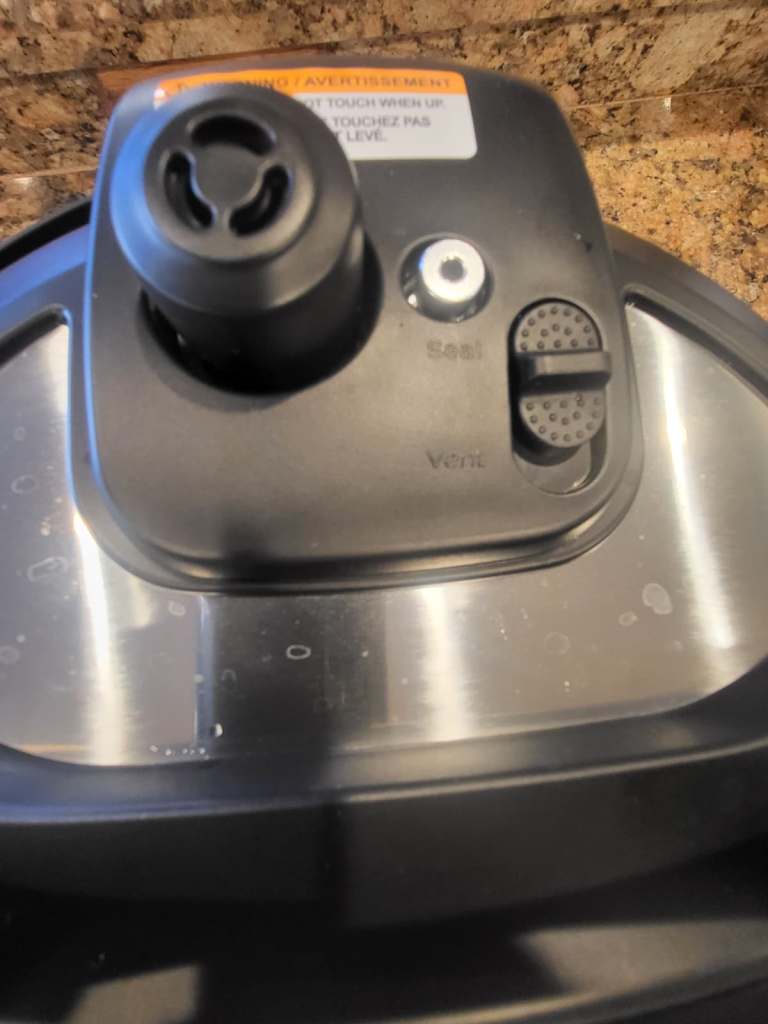
Turn to SEAL. Not vent.

If not sealing → it won’t pressurize.

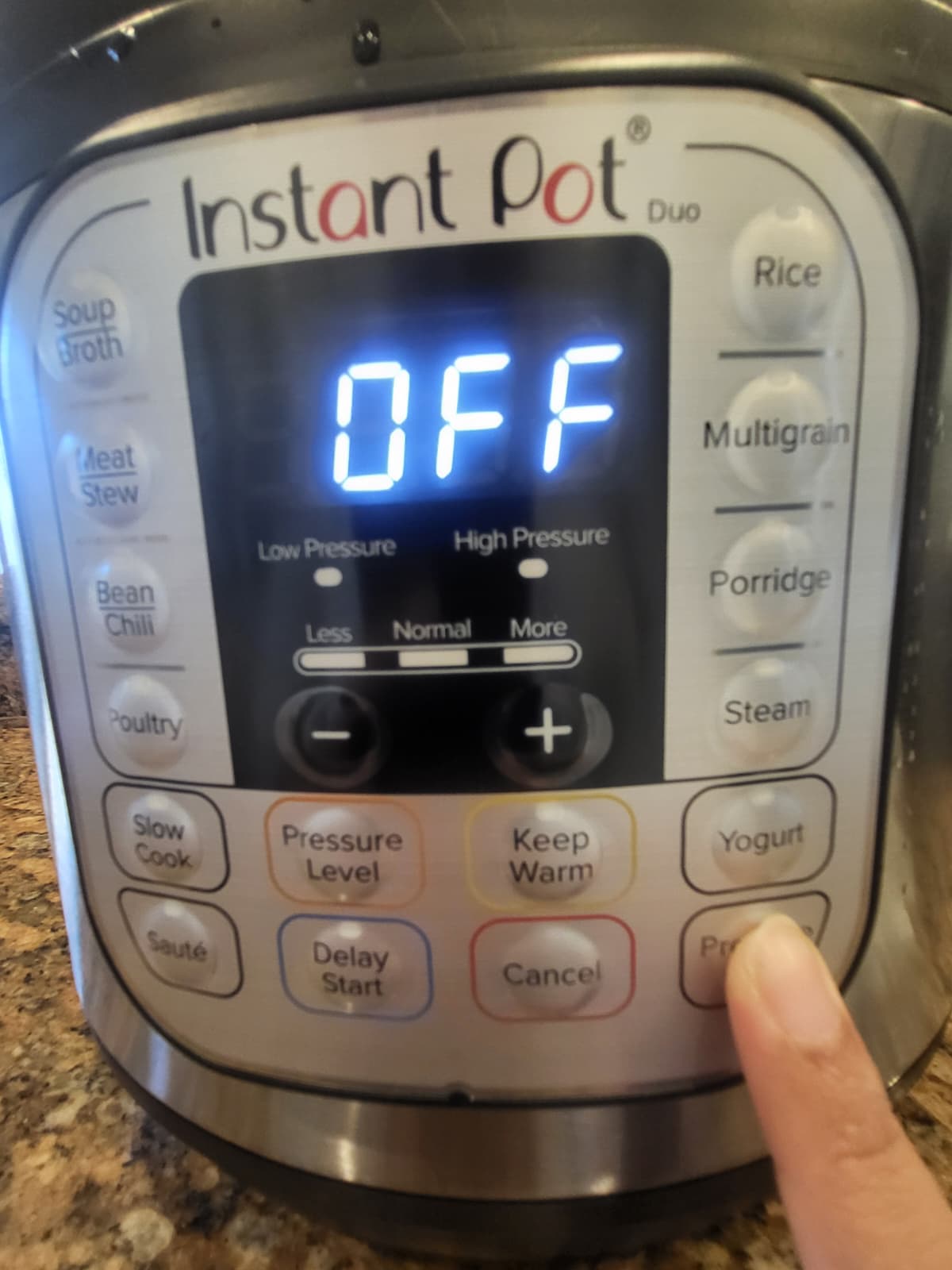
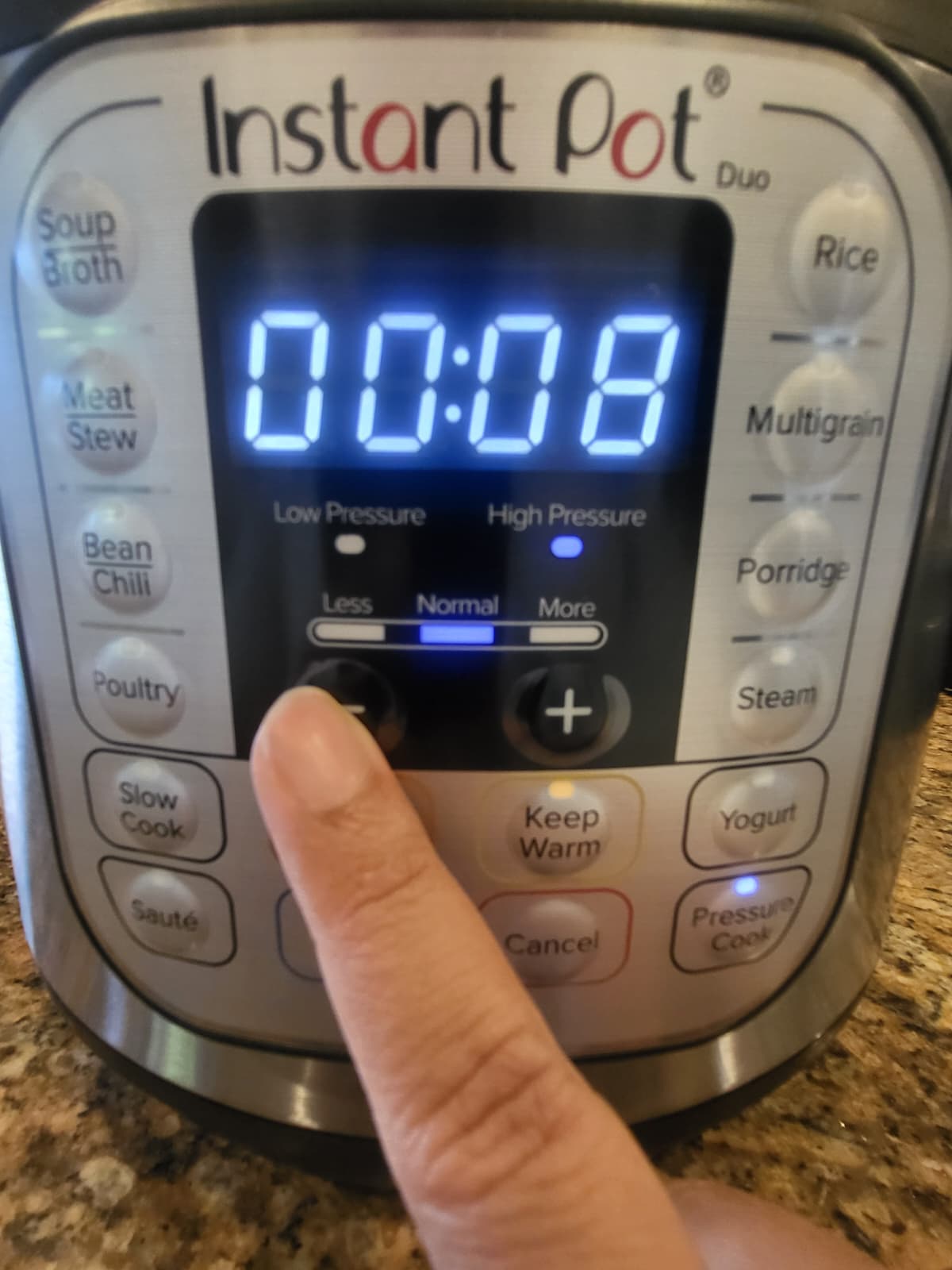
Press Pressure Cook
Set to High Pressure
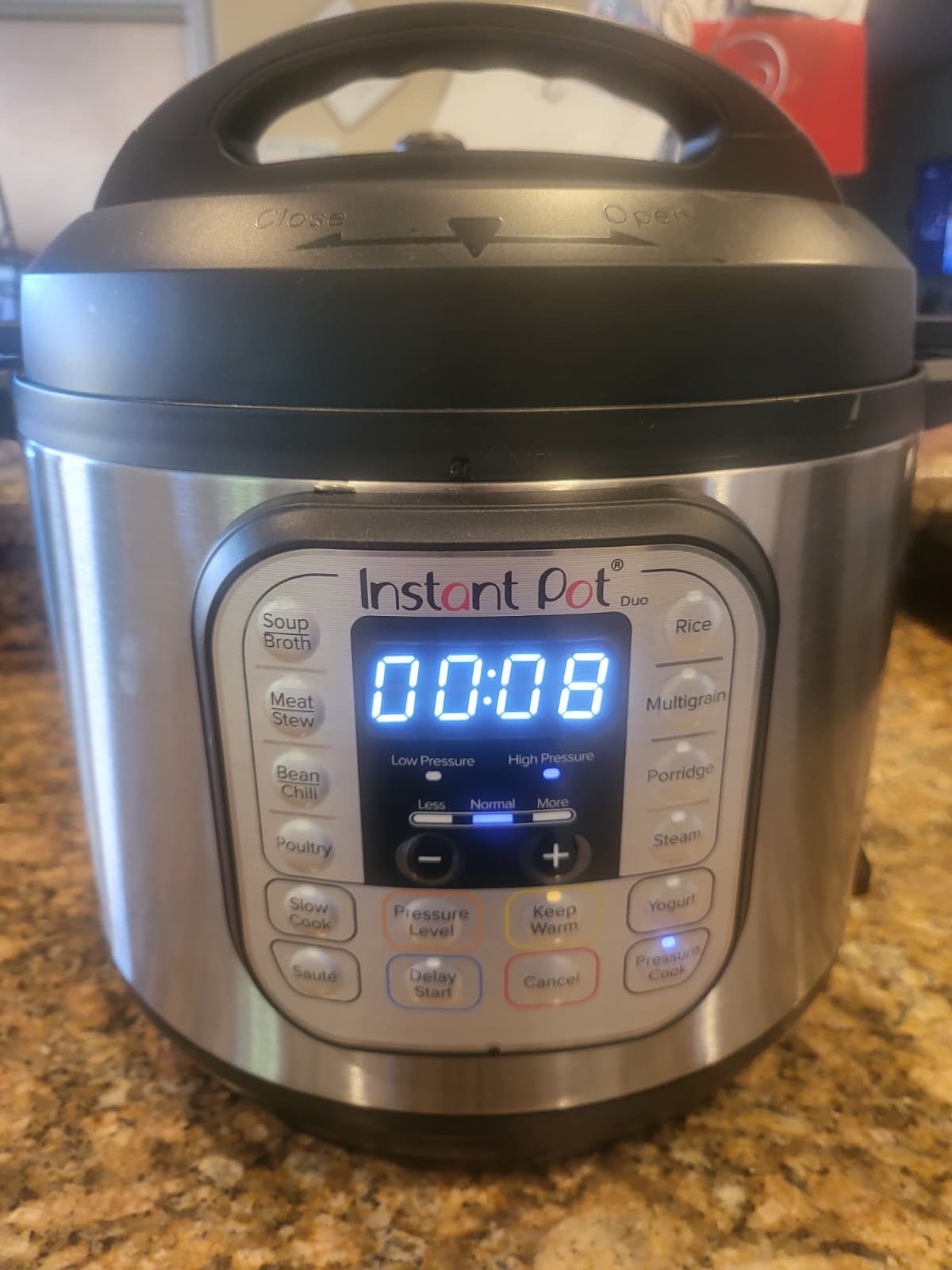
Set time to 8 minutes

Then stop touching it.

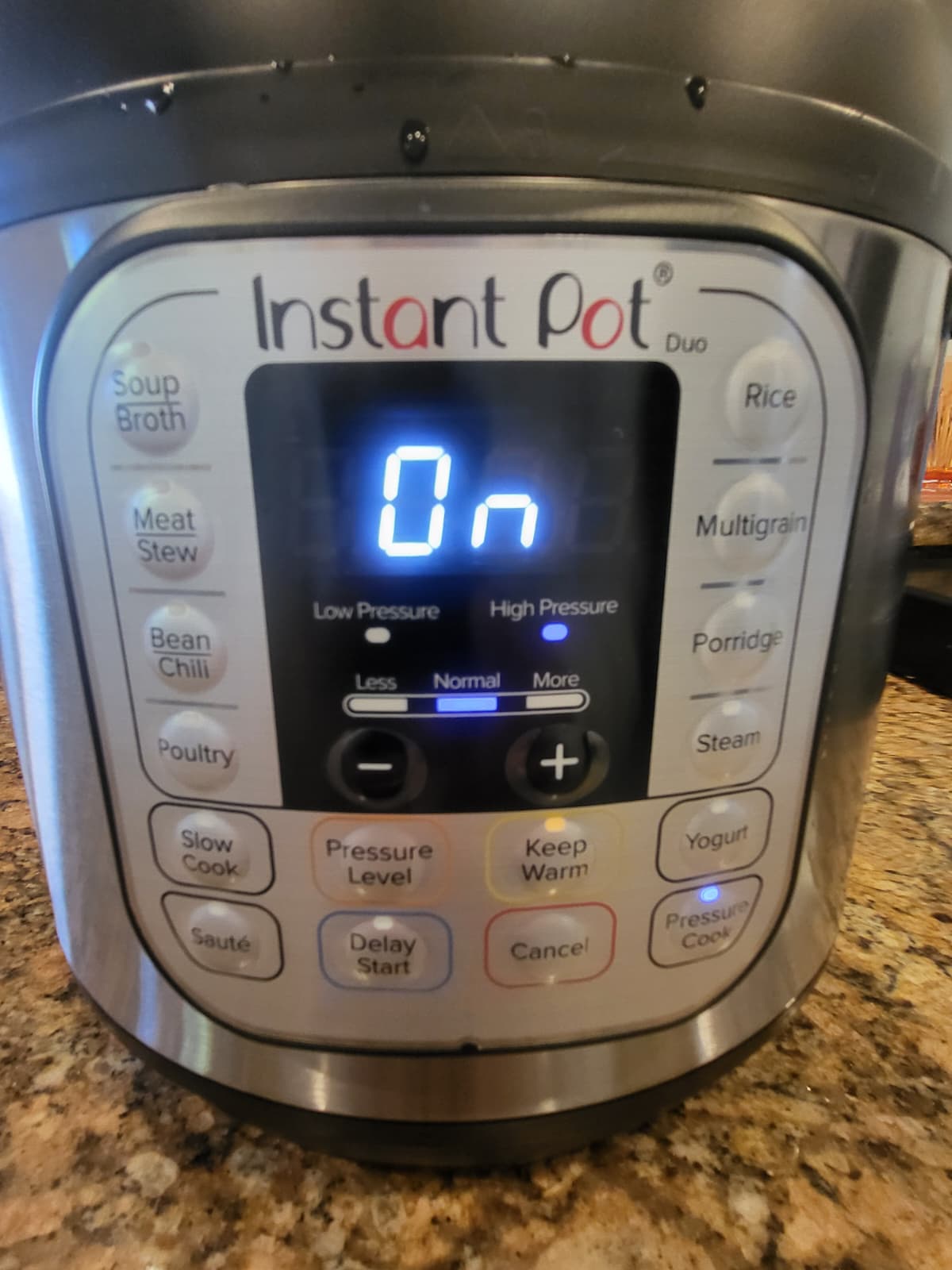
After a few seconds it will beep and start with “On” on the display.

That’s it.

Walk away.
Sit down.
Exist.

For ~10 minutes:
It will say “On”
This means it’s heating and building pressure.

Then:
It will start counting down from 8 minutes.

You do NOT need to do anything.


Step 3 — Let pressure release naturally

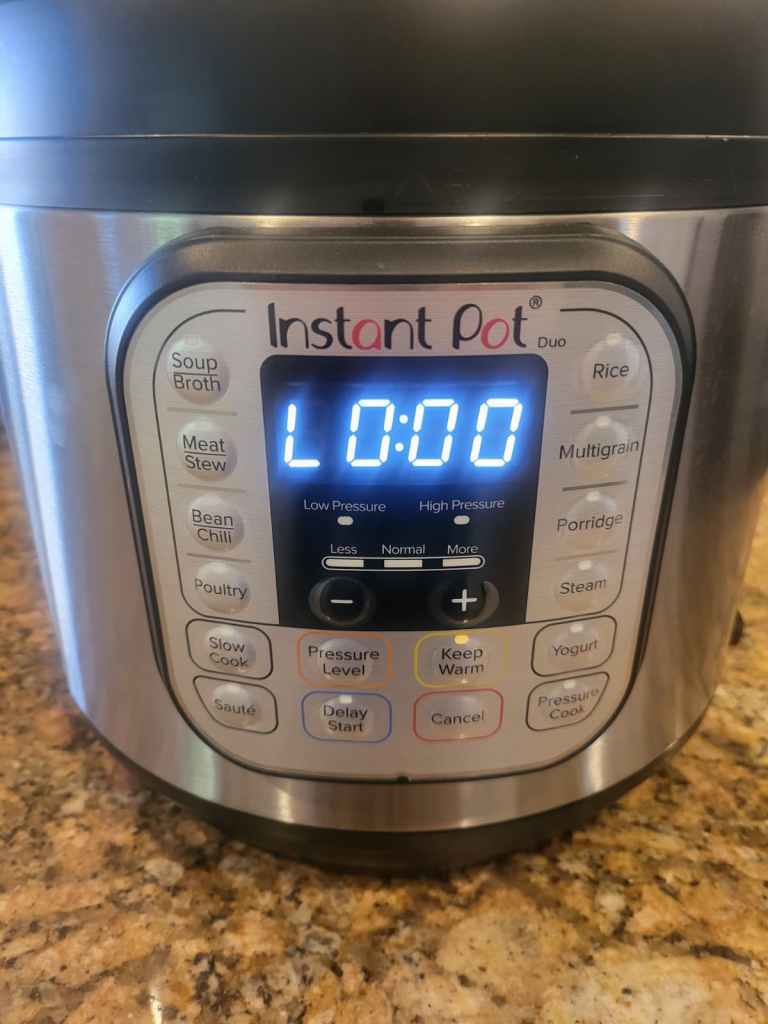
When cooking ends, it will beep and show L0:00,
Now do nothing for 10 minutes
This is called natural release.

Natural release = softer dal and less stress.

Using a spoon or tongs, turn valve to VENT.

Steam will shoot out (normal).

Wait until:

  • steam stops
  • little metal pin drops

Now safe to open.

Open lid when safe. Open lid away from face.


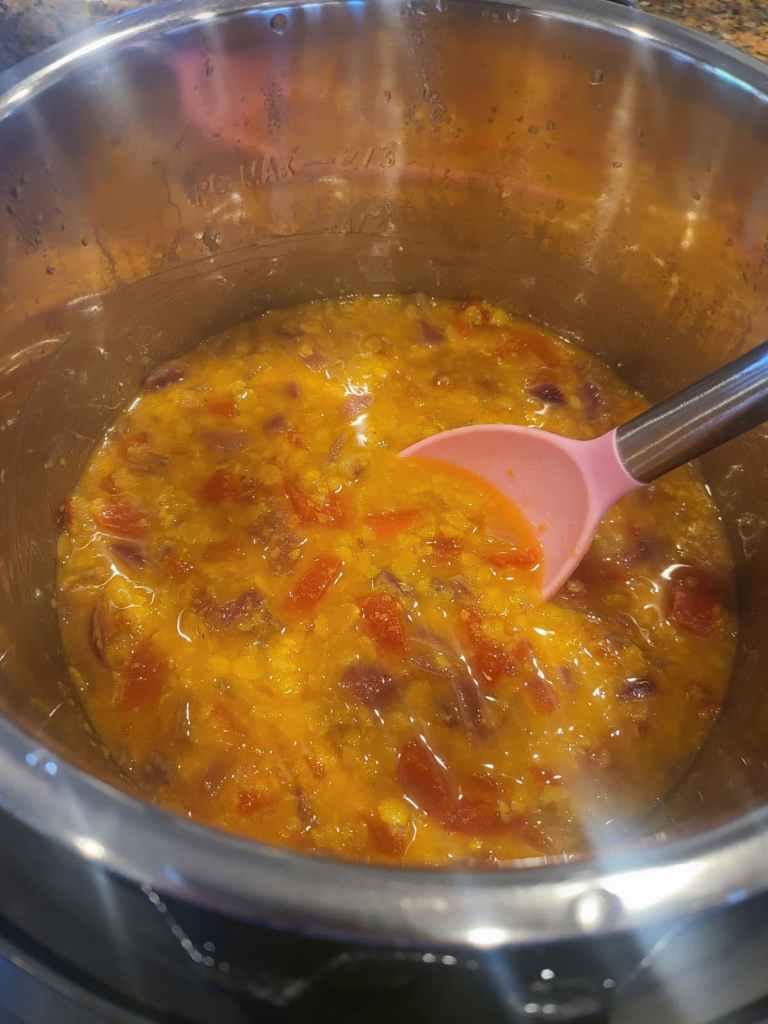
Step 4 — Stir & adjust

Open lid.
Stir.

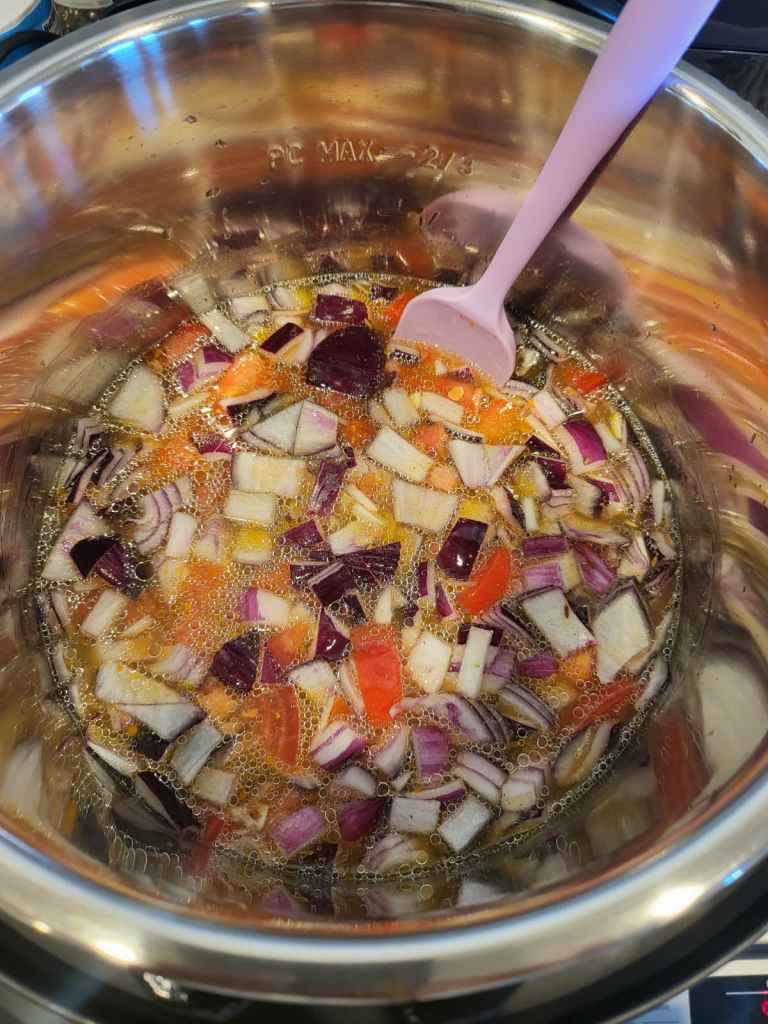
Dal will look soft, cozy, a little messy.
Perfect.

If thick → add hot water.
If thin → simmer on sauté 2–3 mins.
If bland → add salt or butter.

If perfect → eat.


🍚 How to eat

  • Over rice
  • With toast
  • With nothing
  • Standing at the counter
  • Sitting quietly
  • Feeding kids
  • Feeding yourself

All count.


💛 Notes for low-energy days

No tempering required.
No frying required.
No perfection required.

If all you did today was press a button and feed yourself:

That is not small.
That is care.

I see you. You matter. I care. Just keep going. 💛


What’s your version of dal?
Do you have a one-step version that gets you through the week?
Something here you relate to?

Please share — I’d love to hear.
Pseudonyms welcome. First-time comments are moderated to keep this space kind. 💛

High Bandwidth Tea (Loose Leaf, Stovetop)

Loose leaf vs tea bags (quick note)

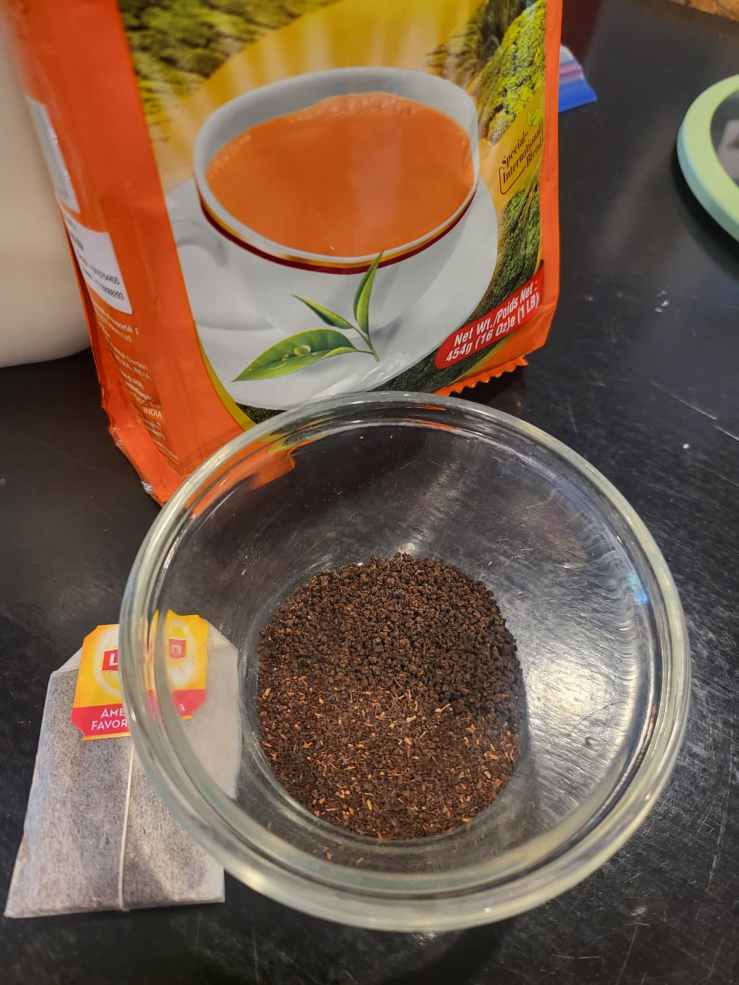
Loose leaf and tea bags are not the same thing — but both are valid. Can you see the difference in the picture?
Tea bags are easier and still cozy. Loose leaf gives a stronger, fuller chai flavor and feels a little more like “real Indian tea.”

Today I’m doing loose leaf (high bandwidth 😅).
Tea bags = a different kind of grace. 💛

What to expect

This is one of those high bandwidth recipes — not because it’s hard, but because it requires a very specific kind of emotional stability:

✨ watching milk on the stove ✨

And if you’ve made Indian-style tea before, you know the classic storyline:
calm → calm → calm → BOILOVER!

Yes, this is the classic boilover.
Yes, it happened to me.
Yes, I was standing right there.
No, I don’t want to talk about it. 😂

I handled it the only way a person can:
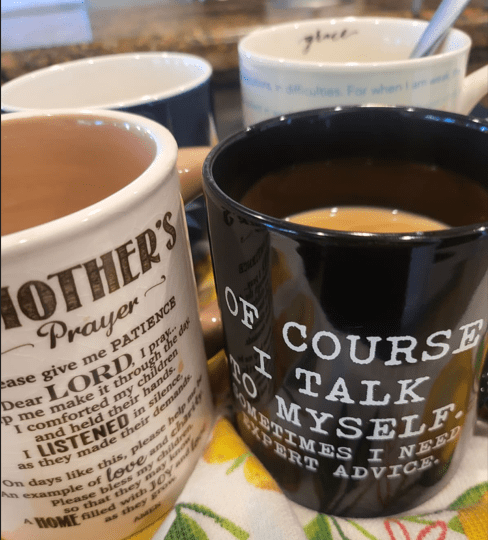
with a prayer🙏, a little grace 💛, some humor 😂, and a healthy dose of humility😅  (shoutout to the mugs for being emotionally supportive.)

Also… I’m not just talking about the tea. 😉


What you need (makes ~4 mugs)

  • 2 cups water
  • 2 cups milk
  • 4 tsp loose black tea
  • 4 tsp sugar (adjust to taste)

What to do

  1. Add water + milk to a small pot.
    Turn heat to medium-high.
  2. Add loose tea.
  3. Bring to a boil — and do not walk away.
    This is where the tea will test your character.
    It will sit there peacefully and then suddenly try to redecorate your stove.
  4. When it rises up, lower the heat immediately.
    Let it boil gently for 2–4 minutes depending on how strong you want it.
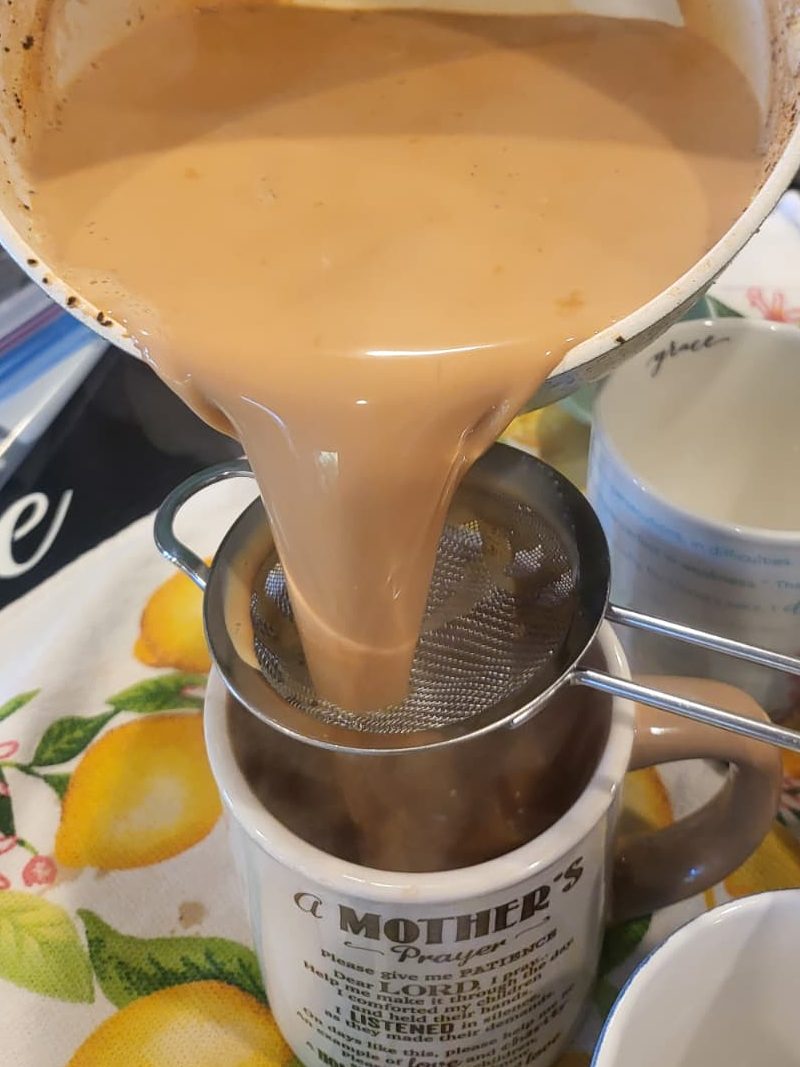
  5. Strain into mugs.
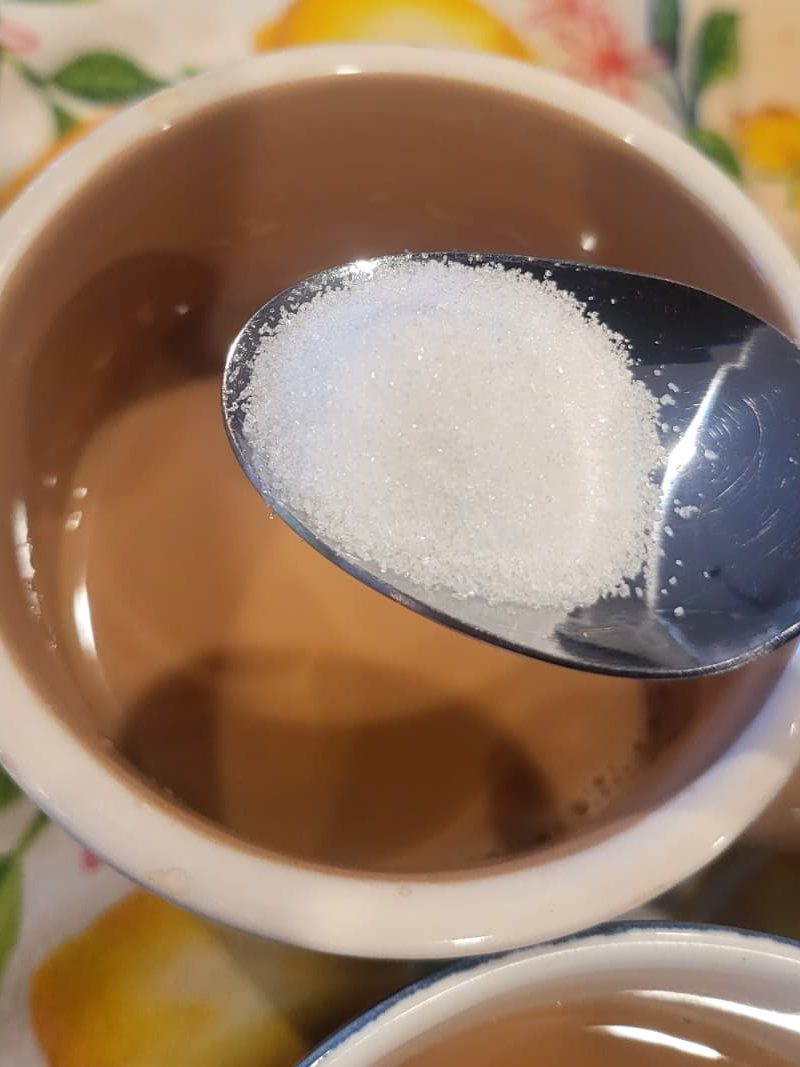
  6. Add sugar. Stir.
    Pour with love. Serve with dignity. Clean stove with humility. 🙂

Notes

  • Want stronger tea? More tea leaves OR longer boil.
  • Want lighter tea? Less tea leaves OR shorter boil.
  • If it boiled over anyway: I see you. You matter. I care. Just keep going. This too shall pass.😅 😂

Tea in real life (with pictures)


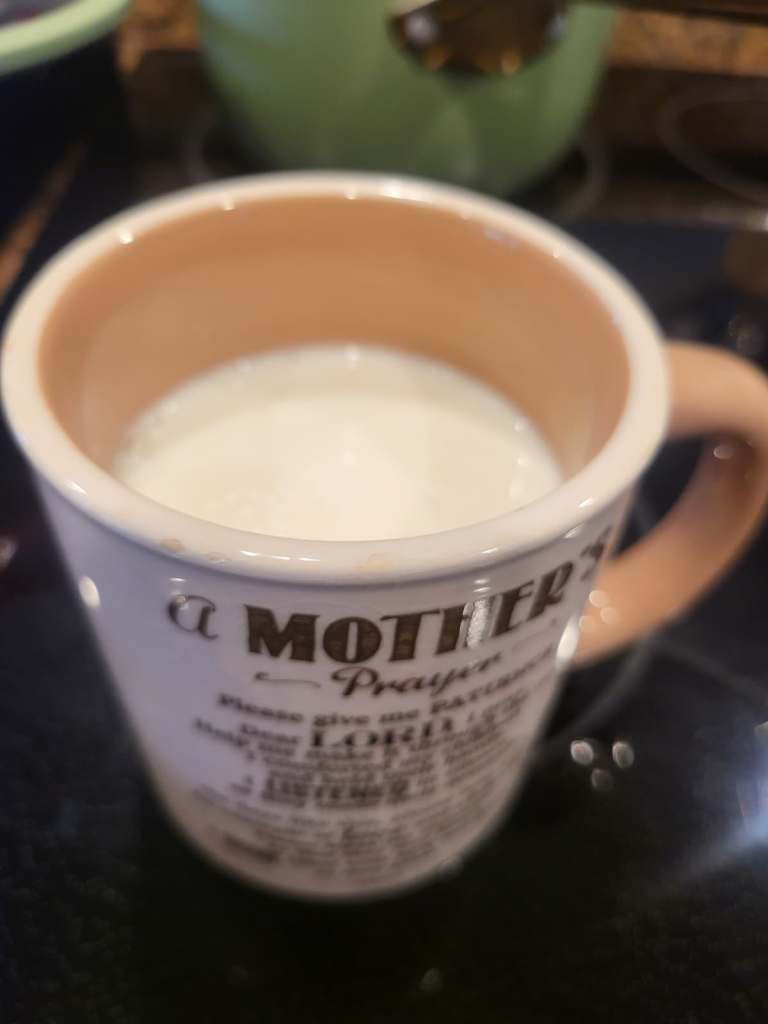
Choose the cup you’ll be drinking out of and eyeball how much tea you’re in the mood to drink. Pour about that much milk.

Do the same with water: the other half of the plan.

I was making 4 cups of tea. So I used 2 cups of milk and 2 cups of water. Measured as in the pictures.

1 cup of milk and 1 cup of water will produce 2 cups of tea.

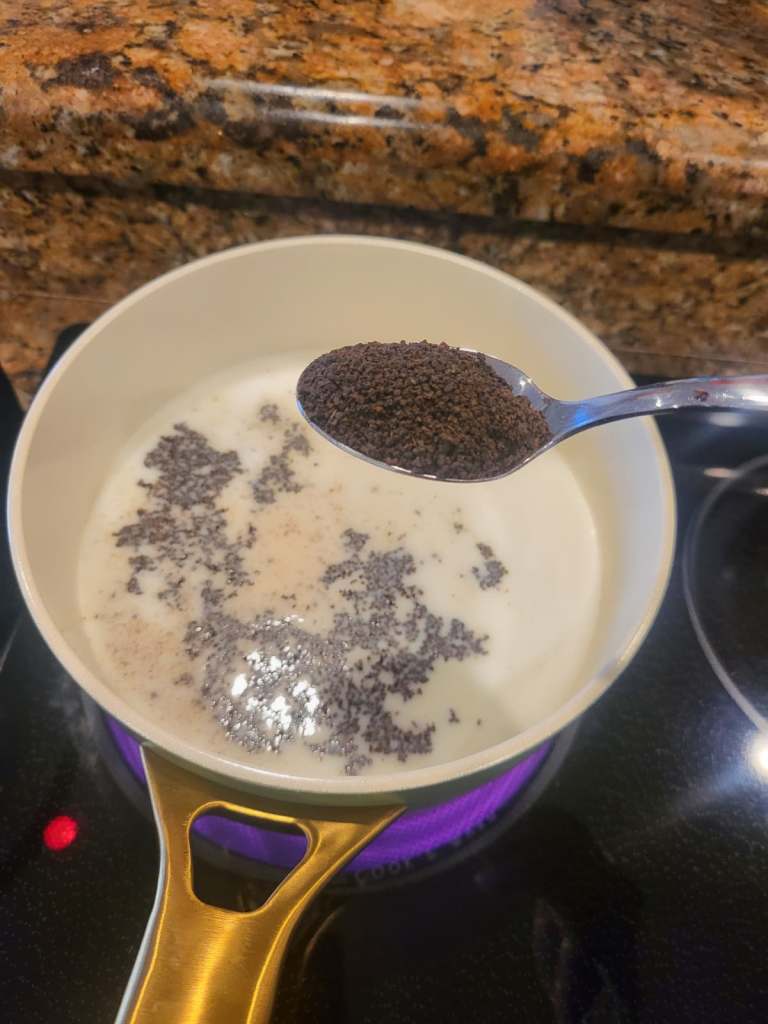
Pour the milk and water into a pot on medium-high heat. Add the loose tea leaves. I used 1 teaspoon per cup, so a total of 4 teaspoons to make 4 cups of tea.

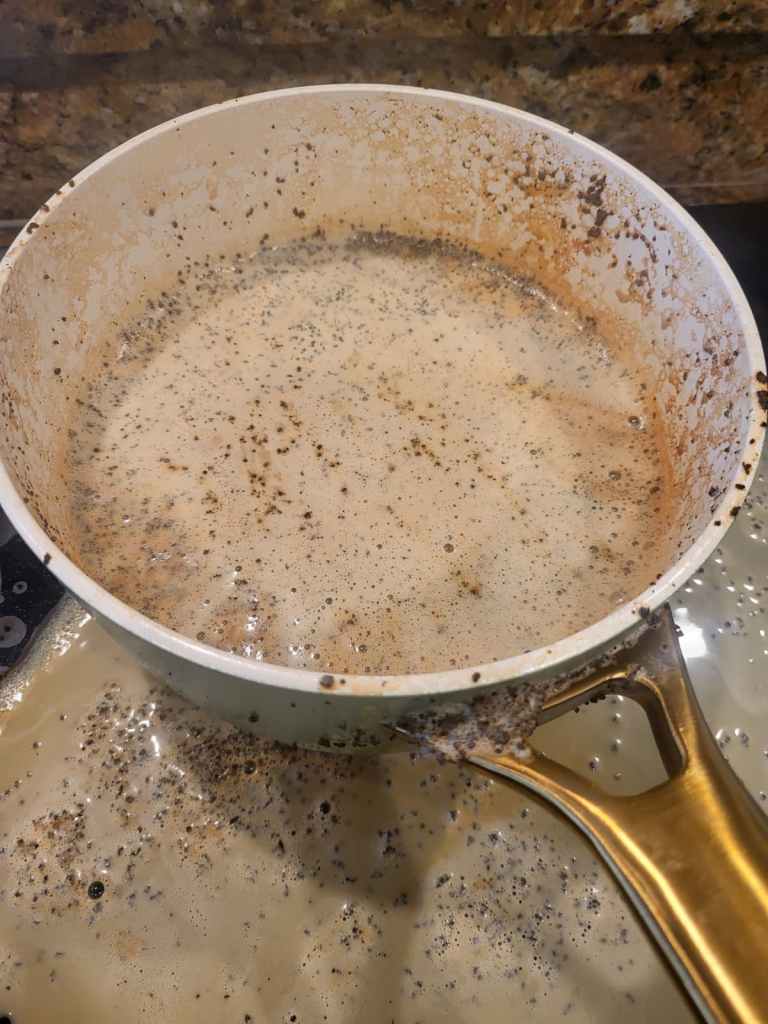
The classic boilover! Yes, I was standing right there. I looked away for a moment and turned back to uncontrollable chaos.

If you’ve made chai before, you already know this moment. Humility.

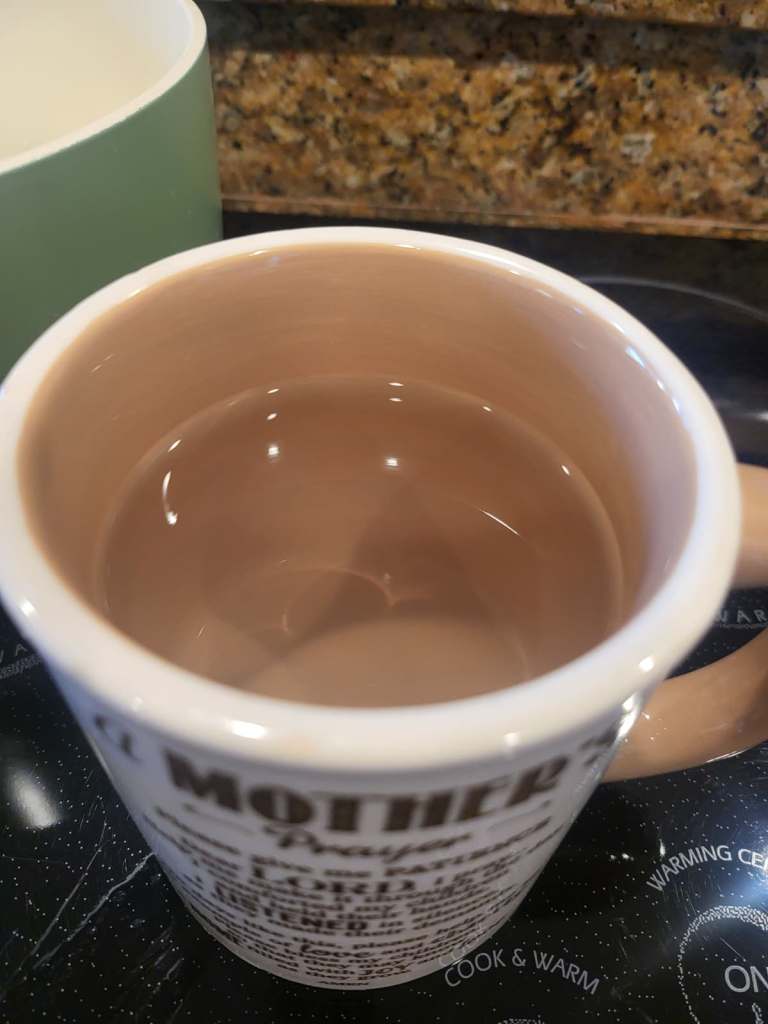
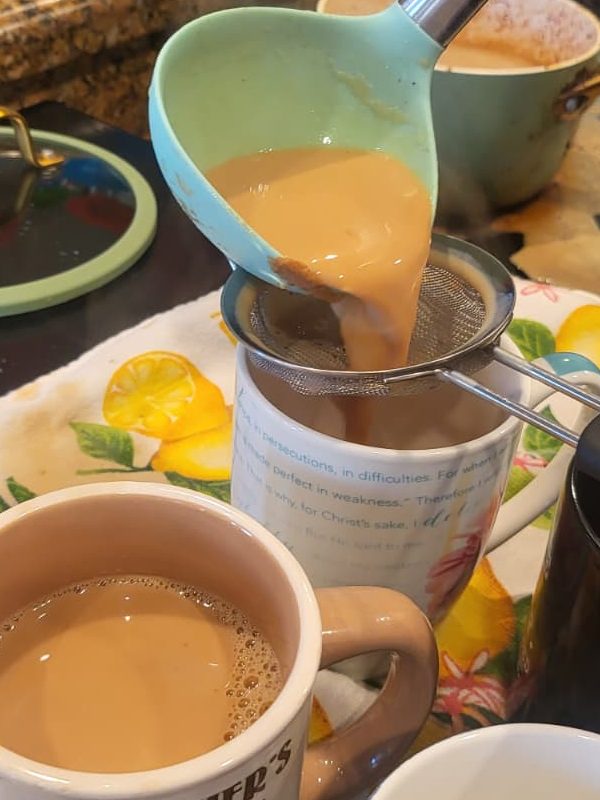
Strain into mugs. Recovery is happening.

Straining with ladle (still recovering lol)

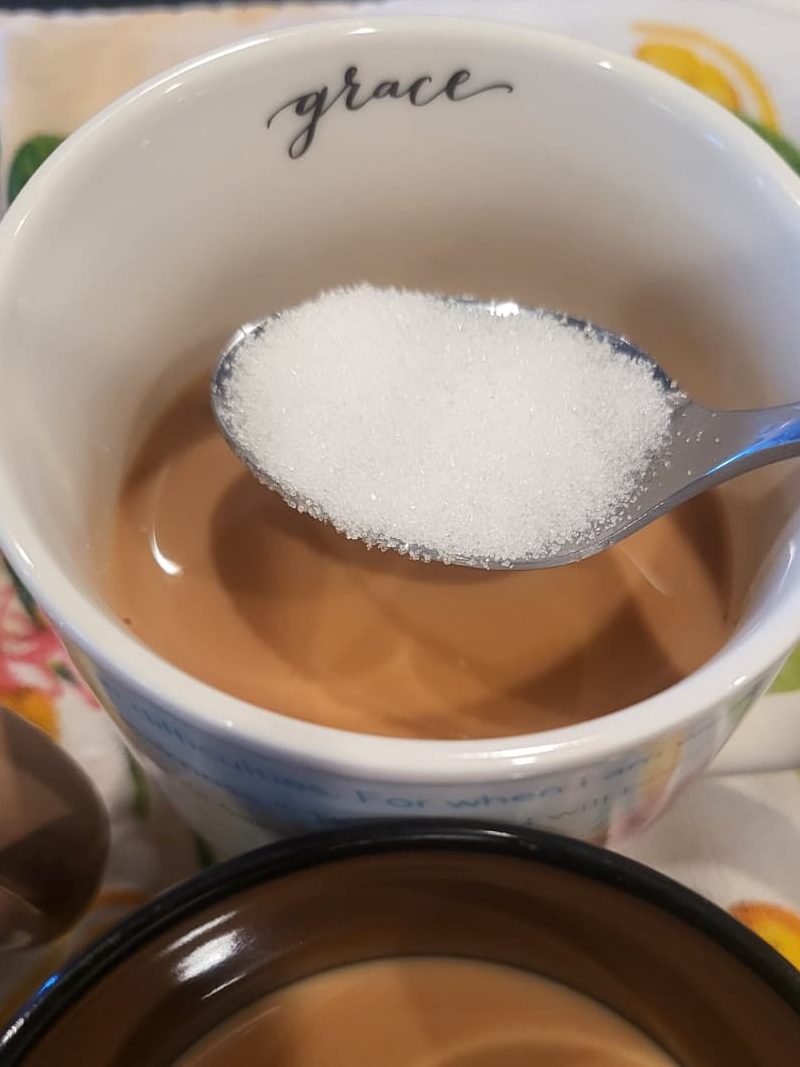
Add sugar to taste, whether 1/2 a teaspoon or 1…or more 🙂

Tea is made. Peace is restored. (Not just about the tea.) 😉


Bonus: Tea Bag Version (Low Bandwidth)

Use a tea bag and obey the box. No experiments on low bandwidth days. 💛


Is there a variation that works in your life, or something here you relate to? Please share — I’d love to hear.
Pseudonyms are welcome. First-time comments are moderated to keep things kind. 💛